


Can the Hydraulic Power CNC Press Brake Machine handle aluminum alloy bending without surface marking or deformation?
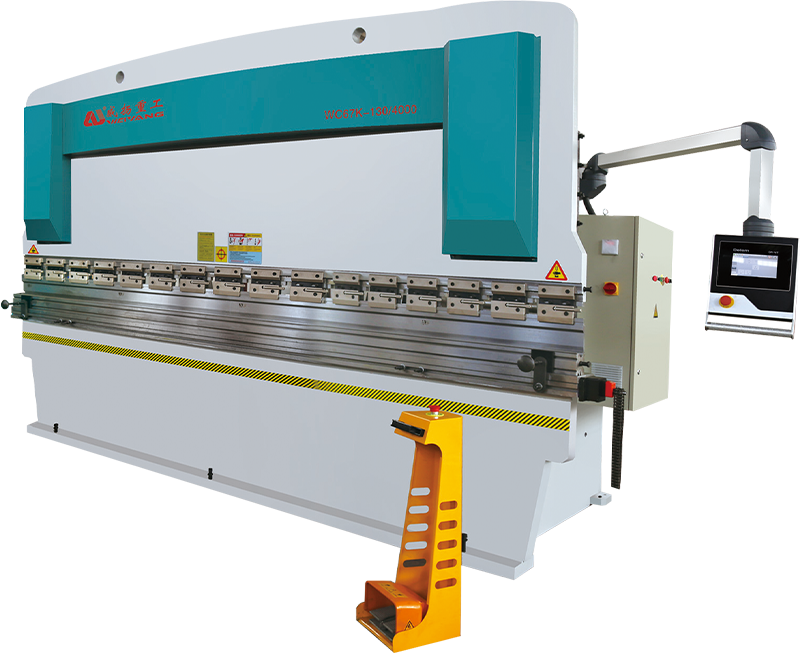
Hydraulic Power CNC Press Brake Machine can bend aluminum alloy without surface marking or deformation, but only when the correct tooling, machine settings, and material-handling protocols are applied. Aluminum's softness (Brinell hardness typically 15–150 HB depending on grade) makes it far more susceptible to surface damage than steel during press brake operations. With the right setup, however, flawless bends on aluminum alloys such as 1050, 3003, 5052, 6061-T6, and 7075 are entirely achievable in production environments.
The challenge is not the machine's capability — modern Hydraulic Power CNC Press Brake Machines have the precision and pressure control to handle aluminum safely — but rather the configuration choices made before and during the bending process.
Why Aluminum Is Prone to Surface Marking
Aluminum alloys are significantly softer than structural steel. A mild steel sheet has a Vickers hardness of approximately 120–160 HV, while common aluminum alloys range from just 35 HV (1050-H14) to around 150 HV (7075-T6). This means standard hardened steel tooling used in a Hydraulic Power CNC Press Brake Machine will easily leave indentations, scratches, or die marks on aluminum surfaces — especially on the visible outer face that rests against the die.
Surface marking typically occurs due to three root causes:
- Direct metal-to-metal contact between the die and a bare aluminum sheet surface
- Excessive bending force applied without pressure adjustment for material grade
- Contamination on tooling surfaces (metal particles, rust, scale from previous steel runs)
Understanding these causes allows operators to systematically eliminate marking risk on the Hydraulic Power CNC Press Brake Machine.
Tooling Selection: The Single Most Important Factor
The choice of die and punch directly determines whether aluminum surfaces survive the bending process. When operating a Hydraulic Power CNC Press Brake Machine on aluminum alloy, the following tooling strategies are proven to eliminate marking:
Polyurethane-Coated or Nylon Dies
Replacing standard V-dies with polyurethane-lined dies is the most widely used solution. Polyurethane inserts (Shore hardness typically 85–95A) act as a cushion between the steel die and the aluminum surface, distributing load evenly and preventing indentation. These inserts are rated for millions of bending cycles before replacement.
Protective Film or Tape Application
Many fabricators apply a thin PVC or polyethylene protective film (0.05–0.1 mm) to the aluminum sheet's bottom face before it contacts the die. This film is left on during bending and removed afterward. This is especially common for anodized or mirror-finish aluminum where even microscopic scratches are unacceptable.
Rounded Punch Tips
Using punch tips with a generous nose radius (e.g., R3 or R4 instead of R0.5) distributes the pressing force over a wider area on the aluminum's top surface, reducing stress concentration and outer-face cracking — a critical concern with harder grades like 6061-T6 and 7075-T6.
Aluminum Alloy Grades and Their Bending Behavior
Not all aluminum alloys behave the same on a Hydraulic Power CNC Press Brake Machine. The table below summarizes key bending characteristics of the most common grades encountered in fabrication:
| Alloy Grade | Tensile Strength (MPa) | Bendability | Springback Level | Marking Risk |
|---|---|---|---|---|
| 1050 / 1100 | 75–125 | Excellent | Low | High (very soft) |
| 3003 | 130–185 | Very Good | Low–Medium | Medium |
| 5052 | 195–260 | Good | Medium | Medium |
| 6061-T6 | 260–310 | Moderate | Medium–High | Low (harder surface) |
| 7075-T6 | 480–570 | Limited | Very High | Low–Medium |
Notably, softer grades like 1050 and 3003 carry the highest marking risk despite being the easiest to bend, because their low hardness means even light contact pressure from a bare steel die creates visible indentations. Harder grades like 6061-T6 resist marking better but require careful overbend compensation for springback.
CNC Parameter Settings for Aluminum on a Hydraulic Press Brake
The Hydraulic Power CNC Press Brake Machine's control system plays a critical role in producing clean aluminum bends. Key parameters that must be adjusted relative to steel processing include:
- Bending speed: Reduce ram descent speed to 5–8 mm/s during the bending phase (versus 10–15 mm/s typical for steel) to avoid shock-loading the aluminum surface against the die.
- Tonnage reduction: Aluminum typically requires 30–50% less tonnage than equivalent-thickness mild steel. The CNC system should apply only the calculated minimum force to prevent over-compression.
- Springback compensation: Aluminum springback ranges from 2° to 8° depending on alloy and temper. The Hydraulic Power CNC Press Brake Machine's angle compensation algorithm must be programmed with material-specific springback values — not steel defaults.
- Back gauge positioning: Use soft contact pressure on back gauge fingers to prevent the gauge from marring the cut edge of the aluminum blank during positioning.
- Y1/Y2 synchronization: Maintain ram parallelism within ±0.01 mm to prevent twisting stress on wide aluminum panels, which can cause permanent warping.
Aluminum vs. Steel: Key Bending Differences on the Same Machine
Operators transitioning a Hydraulic Power CNC Press Brake Machine between aluminum and steel jobs must account for significant differences. Running aluminum with steel-optimized settings is one of the most common causes of surface damage and dimensional error in mixed-material fabrication shops.
| Parameter | Mild Steel (S235/A36) | Aluminum 5052 | Aluminum 6061-T6 |
|---|---|---|---|
| Minimum bend radius (× material thickness) | 0.5–1× t | 1–2× t | 3–4× t |
| Typical springback | 1–3° | 3–5° | 5–8° |
| Force required (3 mm sheet, 1 m length) | ~55 tons | ~22 tons | ~30 tons |
| Risk of cracking at bend | Low | Low–Medium | Medium–High |
| Recommended tooling | Standard hardened steel | Polyurethane-lined die | Polyurethane die + film |
Preventing Deformation: Grain Direction and Minimum Bend Radius
Surface marking is only one concern — structural deformation at the bend zone is equally critical, especially for aerospace and structural aluminum components. Two factors govern deformation risk on a Hydraulic Power CNC Press Brake Machine:
Rolling Grain Direction
Aluminum sheet has a distinct grain direction from the rolling process. Bending perpendicular to the grain (across the rolling direction) is always preferable — it reduces cracking risk significantly. Bending parallel to the grain on tempered alloys like 6061-T6 at tight radii frequently causes orange-peel texture or cracking along the outer bend face. When designing parts for a Hydraulic Power CNC Press Brake Machine, layout nesting should always account for grain orientation.
Observing Minimum Inside Bend Radius
Each aluminum alloy has an absolute minimum inside bend radius below which cracking will occur regardless of machine settings. For example, 6061-T6 at 3 mm thickness requires a minimum inside radius of approximately 9–12 mm — significantly larger than the same thickness in mild steel, which can be bent to a 1.5 mm radius. Programming these limits into the Hydraulic Power CNC Press Brake Machine's CNC controller prevents operators from inadvertently selecting undersized tooling.
Tooling Cleanliness and Changeover Protocol
In shops where a Hydraulic Power CNC Press Brake Machine processes both steel and aluminum, tooling contamination is a major and often overlooked cause of surface marking. Steel scale, rust particles, and swarf embedded in or resting on die surfaces act like abrasive media against aluminum during bending.
Best practice protocols include:
- Wipe all die and punch surfaces with a lint-free cloth before switching from steel to aluminum jobs
- Inspect V-die grooves for embedded particles using a flashlight — use a wooden or brass implement to dislodge debris, never steel
- Dedicate separate polyurethane die inserts exclusively to aluminum work — do not reuse them on steel
- Store aluminum-dedicated tooling in sealed cases to prevent airborne steel dust contamination in shared workshop environments
Following these steps eliminates the majority of contamination-related surface defects reported in mixed-material Hydraulic Power CNC Press Brake Machine operations.
Certain industries demand zero surface marking on bent aluminum components. In these sectors, the full protocol — polyurethane tooling, protective film, clean changeover, and CNC-controlled minimum force — is standard procedure on every Hydraulic Power CNC Press Brake Machine in the facility:
- Aerospace: Anodized and bare aluminum structural panels must be free of surface marks that could initiate fatigue cracks under cyclic loading
- Architectural cladding: Mirror-finish or anodized aluminum facade panels require pristine surfaces for aesthetic acceptance
- Electronics enclosures: Extruded and sheet aluminum housings for precision instruments must meet surface finish Ra ≤ 1.6 μm after bending
- Marine fabrication: 5083 and 5052 alloy components used in boat structures must retain full corrosion resistance — surface damage can compromise the oxide layer
In all of these cases, operators rely on the Hydraulic Power CNC Press Brake Machine's programmable pressure control and angle correction capabilities — combined with appropriate tooling — to consistently deliver parts that require no post-bend surface rework.
Related Product
-
 +86-13813747229
-
 [email protected]
-
 No. 22 Haifang Avenue, Chengdong Town, Hai'an City, Jiangsu Province,China.
Copyright © 2024Jiangsu Weiyang Heavy Industry Technology Co., Ltd. All Rights Reserved.
Custom Hydraulic Power CNC Press Brake Machines Manufacturers
