


Can the Single Platform Laser Cutting Machine perform both cutting and engraving functions simultaneously or interchangeably?
1. Dual Function Capability: Versatility of the Machine
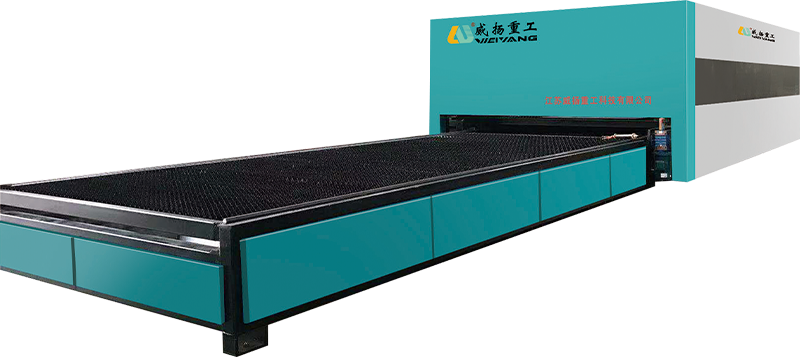
The Single Platform Laser Cutting Machine is engineered to support both cutting and engraving operations, offering versatility for industrial and commercial applications. Cutting typically involves full penetration of the material, requiring higher laser power, slower traversal speeds, and sometimes the use of assist gases like oxygen or nitrogen to enhance cutting efficiency and edge quality. Engraving, on the other hand, is a surface-level process that removes material selectively without cutting through, using lower power settings and faster scanning speeds. Many modern machines allow operators to switch between these two modes seamlessly via software controls or preset configurations, enabling a single machine to handle multiple production requirements. This versatility reduces the need for multiple specialized machines, lowers capital costs, and simplifies workflow planning in production facilities.
2. Limitations of Simultaneous Operation
While certain advanced models advertise the ability to perform cutting and engraving “simultaneously,” true concurrent operation using a single laser beam is constrained by fundamental physics. Cutting requires concentrated energy to penetrate the material, while engraving demands lower intensity to preserve surface detail. Attempting both at the exact same moment may compromise one or both operations due to insufficient energy distribution or excessive localized heating. In practice, single-platform machines achieve the effect of simultaneous functionality by rapidly alternating laser parameters—power, pulse frequency, and scanning speed—across the cutting and engraving paths. This allows both tasks to be completed in a single workflow without the need for manual intervention, effectively delivering both outcomes efficiently, even if not technically at the exact same instant.
3. Software Integration and Workflow Management
The ability to perform cutting and engraving interchangeably or sequentially depends heavily on sophisticated CAD/CAM software integration. Modern Single Platform Laser Cutting Machines use software that allows users to assign different laser parameters to specific design layers or zones. For example, a vector layer may be designated for cutting with high power, while a raster layer is assigned for engraving with lower intensity. The software manages the sequence, speed, and movement of the laser head to ensure that each operation is executed optimally. This integration minimizes the risk of thermal distortion, ensures precise alignment of engraved and cut features, and maximizes throughput. Advanced software may also allow nesting, optimization of tool paths, and automated adjustment of focus and power based on material thickness, further enhancing operational efficiency.
4. Material and Thickness Considerations
The feasibility and quality of combining cutting and engraving functions depend heavily on the material type, thickness, and thermal sensitivity. Thin metals, acrylic sheets, wood, or composite panels generally tolerate both processes within the same workflow without compromising structural integrity. For thicker metals, heat accumulation during cutting and engraving may cause warping, discoloration, or incomplete penetration if parameters are not carefully optimized. Material-specific presets within the machine’s software allow operators to adjust power, speed, and focal length to minimize defects. Using protective coatings or assist gases can enhance surface finish and reduce unwanted burn marks, enabling high-quality results for both cutting and engraving on a single material sheet.
5. Industrial Applications and Workflow Efficiency
From a production perspective, the ability to interchange or sequentially perform cutting and engraving on a Single Platform Laser Cutting Machine provides significant operational benefits. It reduces setup time, as operators do not need to transfer materials between machines for separate processes, and minimizes human handling, which decreases errors and scrap rates. This capability is particularly valuable for high-precision applications such as custom signage, electronics enclosures, metal fabrication, and decorative or branding applications. Rapid mode-switching and layer-based control allow manufacturers to achieve complex designs in one workflow, maintain consistent quality, and scale operations efficiently without investing in multiple specialized machines.
Related Product
-
 +86-13813747229
-
 [email protected]
-
 No. 22 Haifang Avenue, Chengdong Town, Hai'an City, Jiangsu Province,China.
Copyright © 2024Jiangsu Weiyang Heavy Industry Technology Co., Ltd. All Rights Reserved.
Custom Hydraulic Power CNC Press Brake Machines Manufacturers
