


How does the CNC Laser Cutter manage heat-affected zones to minimize material warping or discoloration during cutting?
Understanding Heat-Affected Zones (HAZ)
The heat-affected zone (HAZ) refers to the area adjacent to the laser cut where the material experiences thermal changes that do not completely melt the material but alter its microstructure, mechanical properties, or surface finish. In metals, the HAZ can cause grain growth, reduced hardness, and residual stresses, while in plastics and composites it can lead to melting, discoloration, or deformation. Controlling HAZ is critical to maintain dimensional accuracy, edge quality, and structural integrity of the workpiece. Excessive HAZ can compromise tight tolerances in precision parts, produce unsightly burn marks, and lead to material weakening, which is especially critical in aerospace, automotive, and medical applications. Understanding the material’s thermal conductivity, melting point, and susceptibility to oxidation is essential for effective HAZ management in CNC laser cutting operations.
Laser Power and Speed Optimization
One of the most effective methods for controlling HAZ is the careful adjustment of laser power and cutting speed. CNC Laser Cutters allow operators to tailor power settings to the material type and thickness, ensuring sufficient energy to cut through the material while minimizing excess heat input. High-speed, low-power cuts are typically used for thin or heat-sensitive materials to prevent warping or charring, whereas thicker metals may require slower cutting with controlled power modulation to allow heat to dissipate gradually. Optimizing these parameters also reduces thermal stress and the risk of micro-cracking or residual distortion, ensuring precise, high-quality cuts. Maintaining a consistent cutting speed relative to laser power prevents localized overheating and promotes uniform edge quality.
Pulse Modulation and Frequency Control
Modern CNC Laser Cutters frequently employ pulsed laser operation instead of continuous-wave output to minimize thermal exposure. Pulsed lasers deliver energy in discrete bursts, allowing the material to partially cool between pulses and reducing overall HAZ. By adjusting the pulse duration, frequency, and duty cycle, operators can finely control the thermal load applied to the material. This is especially important for sensitive or thin materials that are prone to melting, discoloration, or delamination. Pulse modulation not only reduces warping but also enhances cutting precision for intricate designs or micro-features. Coupled with appropriate speed adjustments, pulsed operation enables CNC Laser Cutters to maintain sharp, clean edges with minimal thermal degradation.
Assist Gas and Cooling Techniques
The use of assist gases, such as nitrogen, oxygen, or air, plays a key role in HAZ management. Inert gases like nitrogen protect the material from oxidation while simultaneously cooling the cutting zone, reducing discoloration and thermal distortion. Oxygen can enhance cutting efficiency in metals but must be balanced to prevent excessive edge oxidation. Some CNC Laser Cutters also incorporate localized cooling systems, such as directed air or water-cooled fixtures beneath the workpiece, which dissipate heat quickly from the HAZ. These techniques reduce thermal accumulation, prevent warping, and improve edge quality. Properly configured gas flow and cooling systems are especially critical when cutting large sheets or complex geometries, where heat buildup can be significant over extended cuts.
Focused Beam Control and Optics Optimization
Precise control of the laser beam’s focus is essential to minimizing HAZ. By focusing the laser spot accurately on the material surface, energy is concentrated only where needed, reducing unwanted heating of adjacent regions. CNC Laser Cutters often feature dynamic focus adjustments that maintain optimal beam focus even when cutting materials of varying thickness or following complex contours. Regular maintenance of optics, including lens cleaning and mirror alignment, is critical to prevent beam scattering, which could enlarge the HAZ. High-quality optics and accurate beam delivery ensure that the heat is applied efficiently, producing clean edges with minimal thermal distortion or discoloration, even during high-speed production runs.
Related Product
-
 +86-13813747229
-
 [email protected]
-
 No. 22 Haifang Avenue, Chengdong Town, Hai'an City, Jiangsu Province,China.
Copyright © 2024Jiangsu Weiyang Heavy Industry Technology Co., Ltd. All Rights Reserved.
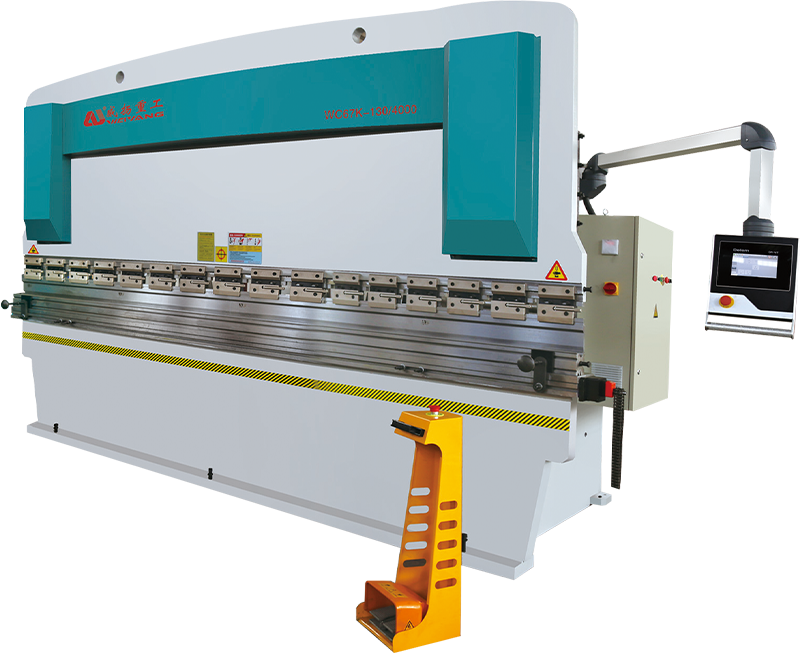
Custom Hydraulic Power CNC Press Brake Machines Manufacturers
