


Is a Hydraulic Power CNC Press Brake Machine more suitable for stainless steel forming than a Manual Press Brake?
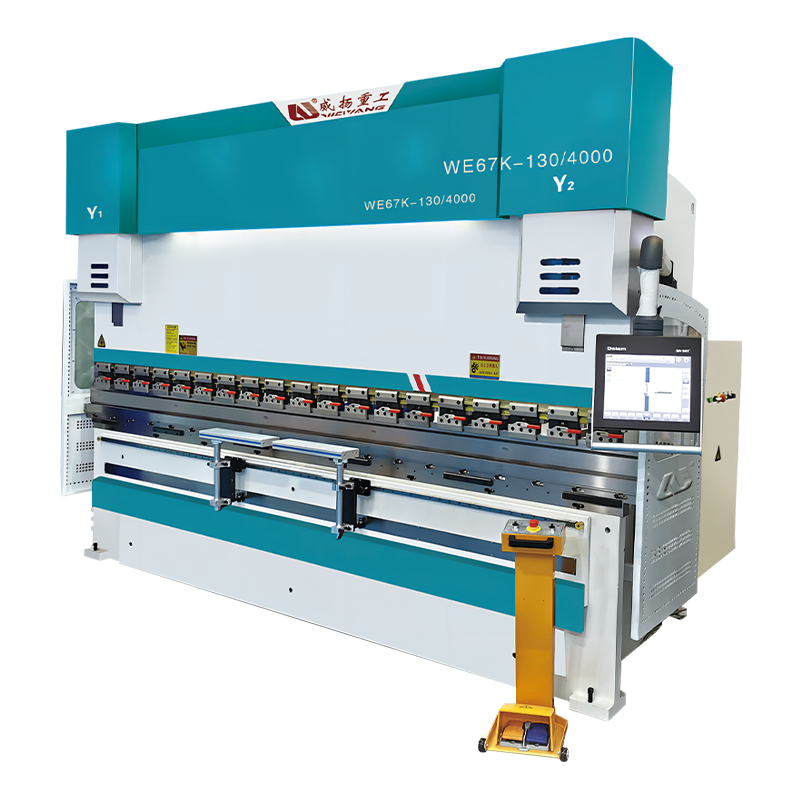
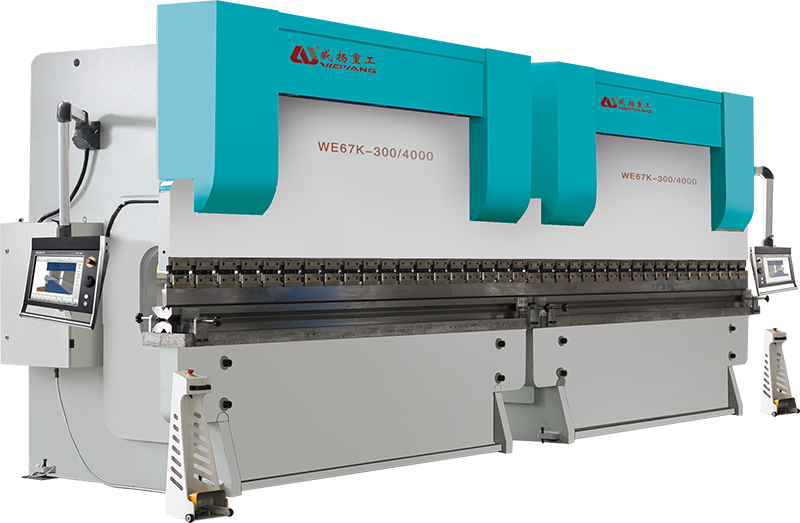
The CNC hydraulic press brake is generally more suitable for stainless steel forming than a manual press brake. Stainless steel has a higher yield strength, greater springback tendency, and stricter tolerance requirements compared to mild steel, all of which demand consistent tonnage control, programmable back gauges, and precise ram positioning. A manual press brake relies heavily on operator skill and visual judgment, which introduces variability that stainless steel simply does not tolerate well. For shops working with 304, 316, or duplex stainless sheets, a hydraulic power CNC press brake machine delivers the repeatability and force accuracy needed to avoid cracking, over-bending, or inconsistent angles across a production run.
Why Stainless Steel Demands More Precise Bending Control
Stainless steel behaves differently under load than carbon steel. It work-hardens faster, has a higher elastic modulus, and springs back more aggressively after the bending force is released. In practical terms, a bend that looks correct at the moment of forming can open up by several degrees once the sheet relaxes. Compensating for this requires either precise overbending or real-time pressure adjustments, both of which are far easier to manage with a CNC hydraulic press brake than with manual lever or foot-pedal control.
Springback Compensation
A hydraulic power CNC press brake machine can store springback values by material grade and thickness, automatically adjusting the bend angle for each job. On a manual machine, the operator must estimate this compensation by eye and experience, which often results in scrapped parts, especially on thinner gauges below 1.5mm where stainless steel is particularly sensitive to over-travel.
Material Behavior Under Repeated Loading
Because stainless steel work-hardens with each bending cycle, the force required to complete a second or third bend on the same part can differ from the first. A CNC hydraulic press brake continuously adjusts ram pressure based on programmed values, keeping each stroke consistent even as material behavior shifts slightly across a multi-bend part. A manual machine has no such feedback mechanism, so the operator must compensate manually, increasing the likelihood of inconsistent results on complex parts.
Accuracy and Repeatability Comparison
Repeatability is where the gap between the two machine types becomes most obvious. A CNC hydraulic press brake typically holds bend angle tolerances within ±0.3 to ±0.5 degrees across an entire production batch, while manual press brakes often vary by ±1 to ±2 degrees or more, depending on operator fatigue and consistency. For stainless steel parts used in food-grade equipment, medical enclosures, or architectural panels, this level of variance on a manual machine can lead to visible misalignment and failed assembly fits.
| Factor | CNC Hydraulic Press Brake | Manual Press Brake |
|---|---|---|
| Bend Angle Tolerance | ±0.3° to ±0.5° | ±1° to ±2° |
| Springback Compensation | Automatic, programmable | Manual estimation |
| Batch Consistency | High | Variable |
| Suitable Sheet Thickness Range | 0.5mm to 25mm+ | 0.5mm to 6mm (practical limit) |
Tonnage and Material Thickness Capabilities
Stainless steel requires significantly more bending force than mild steel of the same thickness, often 30 to 50 percent more tonnage due to its higher tensile strength. A hydraulic power CNC press brake machine is built to deliver and hold high tonnage consistently throughout the stroke, which is essential when forming thicker stainless plates. Manual press brakes are usually limited to lighter gauge stainless steel because the operator's physical input becomes the limiting factor once thickness or tonnage requirements rise.
Handling Thicker Gauges
For stainless steel plate above 3mm, a CNC hydraulic press brake maintains even pressure distribution across the bending length, reducing the risk of surface marking or uneven bend lines. Manual machines struggle here because inconsistent force application can create visible stress lines on the polished stainless surface, which is a major cosmetic issue in industries like commercial kitchen equipment and elevator paneling.
Multi-Axis Back Gauge Precision
Many CNC hydraulic press brake systems include multi-axis programmable back gauges that position the sheet automatically for each bend sequence. This is especially valuable for stainless steel parts with multiple flanges, where a manual back gauge would require repeated re-measurement and manual repositioning, increasing both setup time and the chance of cumulative error across a multi-bend workpiece.
Surface Finish Protection During Forming
Stainless steel is often used precisely because of its polished or brushed surface finish, and that finish is easily damaged by inconsistent tooling pressure or uneven ram descent. A CNC hydraulic press brake offers smoother, more controlled ram movement, which reduces scratching, denting, and tool marking. Manual operation, by contrast, depends on the operator's ability to apply even pressure by hand or foot, which is difficult to do consistently over an eight-hour shift.
- Consistent ram speed reduces surface marking on polished stainless sheets
- Programmable pressure settings prevent over-compression at the bend line
- Reduced operator fatigue lowers the risk of inconsistent handling marks
- Slower, controlled approach speeds near contact point minimize tooling impact marks
Tooling Compatibility and Setup Efficiency
Stainless steel forming often calls for specialized tooling, including polished punches and dies designed to minimize surface contact marks. A CNC hydraulic press brake typically integrates more easily with automatic tool crowning and precision tool alignment systems, ensuring that force is distributed evenly along the entire bending length even on longer stainless sheets. Manual machines can accommodate similar tooling, but without automated crowning compensation, longer bends are more prone to deflection in the middle, resulting in a slightly bowed or inconsistent bend line.
Program Storage for Repeat Jobs
For fabrication shops that repeatedly produce the same stainless steel components, a hydraulic power CNC press brake machine allows bending programs to be saved and recalled instantly. This eliminates the need to re-measure and re-calibrate for every batch, which is a significant time saving compared to manual setup, where each new run essentially starts from scratch regardless of prior experience with the same part.
Production Efficiency and Labor Considerations
Beyond raw forming quality, throughput matters for shops running stainless steel jobs at scale. A CNC hydraulic press brake can store multiple bending programs, switch between part profiles quickly, and reduce setup time significantly compared to a manual machine where each bend sequence must be manually measured and adjusted. This translates into lower labor cost per part and fewer scrapped sheets, which is particularly valuable given that stainless steel material costs are considerably higher than mild steel.
Cost of Errors
Because stainless steel is expensive, a single misformed part represents a meaningful material loss. The precision offered by a hydraulic power CNC press brake machine directly reduces scrap rates, often cited by fabrication shops as a 15 to 25 percent reduction in rejected parts compared to manual forming, making the equipment cost easier to justify over time.
Operator Skill Dependency
Manual press brakes place a heavy burden on operator experience. A skilled operator can produce reasonably good results on simple stainless parts, but training a new operator to the same standard takes time, and results still vary between operators. A CNC hydraulic press brake standardizes the process itself, meaning consistent output does not depend entirely on who is running the machine on a given shift.
Return on Investment Over the Machine Lifecycle
While a CNC hydraulic press brake carries a higher upfront cost than a manual press brake, the total cost of ownership often favors the CNC machine once scrap reduction, labor efficiency, and faster changeover times are factored in. For shops running stainless steel production on a regular basis, the payback period for a hydraulic power CNC press brake machine is frequently shorter than expected, particularly when factoring in reduced rework and fewer warranty claims tied to inconsistent bend quality.
| Cost Factor | CNC Hydraulic Press Brake | Manual Press Brake |
|---|---|---|
| Upfront Investment | Higher | Lower |
| Scrap Rate on Stainless Steel | Low | Moderate to High |
| Labor Cost per Part | Lower over time | Higher due to setup time |
| Setup Time for Repeat Jobs | Minimal (program recall) | Repeated each run |
Industry Applications Where Precision Matters Most
Certain industries rely on stainless steel components with tight dimensional and cosmetic requirements, making the accuracy of a CNC hydraulic press brake especially valuable. Food processing equipment, pharmaceutical enclosures, marine hardware, and architectural facades all demand consistent bend angles and clean surface finishes that manual forming struggles to guarantee at scale.
- Food and beverage processing equipment requiring sanitary, defect-free surfaces
- Medical device enclosures with strict dimensional tolerances
- Architectural and elevator paneling where cosmetic finish is critical
- Marine and offshore hardware exposed to corrosive environments
When a Manual Press Brake May Still Be Acceptable
Manual press brakes are not without their place. For very low-volume work, thin-gauge stainless steel under 1mm, or simple bends where tight tolerances are not critical, a manual machine can still produce usable parts at a lower upfront investment. However, as part complexity, thickness, or production volume increases, the limitations of manual control become a bottleneck rather than a cost-saving advantage, and shifting to a CNC hydraulic press brake becomes the more practical long-term decision.
Final Takeaway
For most stainless steel forming applications, especially those requiring tight tolerances, consistent surface finish, or thicker gauge material, a CNC hydraulic press brake is the more reliable and cost-effective choice over the long term. Its programmable accuracy, springback compensation, and consistent tonnage delivery directly address the specific challenges that stainless steel presents, making the hydraulic power CNC press brake machine the preferred option for professional metal fabrication operations that depend on repeatable, high-quality results.
Related Product
-
 +86-13813747229
-
 [email protected]
-
 No. 22 Haifang Avenue, Chengdong Town, Hai'an City, Jiangsu Province,China.
Copyright © 2024Jiangsu Weiyang Heavy Industry Technology Co., Ltd. All Rights Reserved.
Custom Hydraulic Power CNC Press Brake Machines Manufacturers
