


How does a rolling machine improve production efficiency compared to manual metal forming methods?
Manufacturing & Metal Forming — Deep Dive
A cnc rolling machine improves production efficiency compared to manual metal forming by automating the bending sequence, eliminating repeated manual repositioning, and maintaining consistent pressure and speed throughout every pass — typically cutting cycle time by 50% to 70% for medium-to-large batch runs.
The Direct Answer: CNC Rolling Machines Cut Production Time by Up to 70%
A cnc rolling machine improves production efficiency compared to manual metal forming by automating the bending sequence, eliminating repeated manual repositioning, and maintaining consistent pressure and speed throughout every pass. In practical shop-floor terms, this typically translates into a 50% to 70% reduction in cycle time for medium-to-large batch runs, along with a significant drop in scrap rates caused by operator inconsistency. Manual rolling depends heavily on the skill and stamina of the operator, meaning output quality can vary from part to part, especially during long shifts. A cnc roller, by contrast, executes the same programmed motion every time, so the first part and the thousandth part come out nearly identical.
The first part and the thousandth part come out nearly identical — that is the difference between a skilled hand and a programmed machine.
Below, we break down exactly where these efficiency gains come from, how they translate into measurable cost savings, and what factors determine whether the investment makes sense for your specific production volume.
Speed Comparison: Cycle Times in Real Production Settings
The most immediate and measurable benefit of switching to a cnc rolling machine is the reduction in per-part cycle time. Manual rolling requires an operator to make multiple passes, checking the curvature by eye or with a template after each one, and manually adjusting the rollers between passes. This trial-and-error process is inherently slow and inconsistent.
cnc rolling machine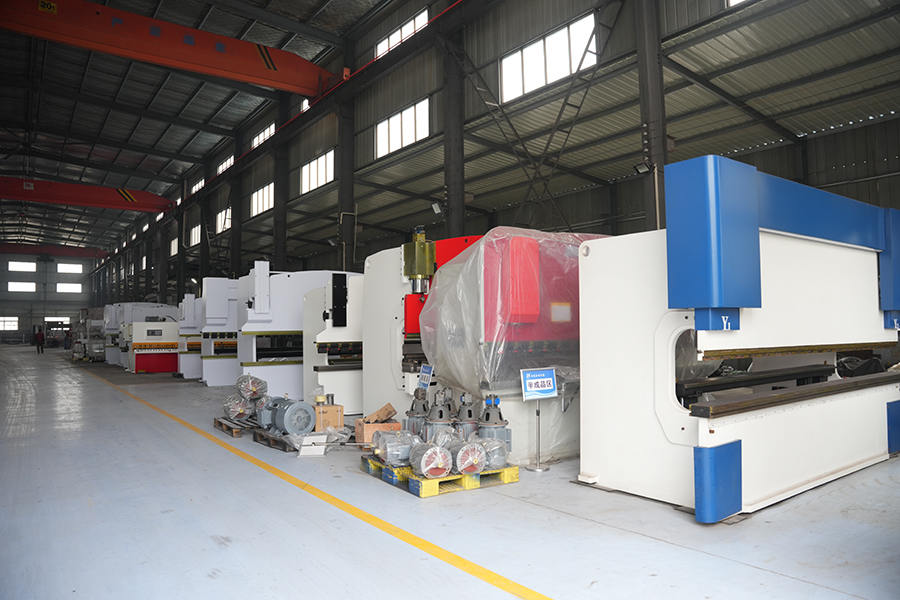
In a typical mid-size metal fabrication shop, manually rolling a 3mm steel plate into a cylindrical section might take between 8 and 12 minutes per piece, including setup adjustments between passes. A programmed cnc roller performing the same task, once the initial program is set, can often complete the identical bend in 3 to 4 minutes, since the machine executes the full pass sequence without stopping to check and re-check curvature manually.
| Process Step | Manual Forming (avg. minutes) | CNC Rolling Machine (avg. minutes) |
|---|---|---|
| Initial setup | 3-5 | 2-3 |
| Forming passes | 5-8 | 1-2 |
| Quality verification | 2-3 | 0.5-1 |
| Total per part | 10-16 | 3.5-6 |
Over a full production run of a few hundred parts, this difference compounds into days of saved labor time, which directly affects delivery schedules and overtime costs.
Precision and Repeatability Reduce Scrap and Rework
Consistent Curvature Across Every Unit
Manual forming relies on human judgment to determine when a plate has reached the correct curvature. Even skilled operators introduce small variances of 1-3 degrees per pass, which accumulate over a production run. A cnc rolling machine uses programmed roller positions and pressure settings, meaning the curvature achieved on part one is replicated on part five hundred with negligible deviation, often within 0.1 to 0.3 degrees of tolerance.
Lower Scrap Rates Translate to Material Savings
Because manual methods are prone to over-bending or under-bending, scrap rates in manual shops commonly range from 5% to 8% on complex profiles. Shops that transition to a cnc roller often report scrap reduction to below 2%, since the machine does not fatigue or lose focus during a long shift. On a production run using expensive alloy or stainless steel, even a 3-percentage-point reduction in scrap can save thousands of dollars in raw material costs per month.
Reducing scrap from 8% to below 2% on alloy or stainless production runs can save thousands of dollars per month in raw material costs alone.
Labor Cost Reduction and Operator Reallocation
Manual rolling typically requires a skilled operator's full, undivided attention throughout the entire process, since the machine cannot run unsupervised. A cnc rolling machine, once programmed, allows a single operator to oversee multiple stages of production or even monitor more than one machine simultaneously, since the forming sequence runs automatically.
- Reduced need for highly specialized manual rolling expertise, since the skill shifts to programming and setup.
- Lower risk of costly errors from fatigue-related mistakes during long shifts.
- Ability to reassign experienced staff to quality control, programming, or other higher-value tasks.
- Reduced overtime costs during periods of high demand, since cycle times are shorter.
Many shops find that the labor savings alone justify the equipment investment within 12 to 24 months, particularly when running multiple shifts.
Handling Complex Geometries and Variable Material Thicknesses
Manual forming struggles with complex or variable-radius profiles because the operator must constantly adjust roller pressure and plate position by feel. A cnc roller can store multiple programmed profiles, allowing operators to switch between conical, cylindrical, or variable-radius forms without recalibrating from scratch each time. This is particularly valuable for shops that handle small-batch, high-mix orders rather than a single repeated product.
Additionally, CNC systems can automatically adjust roller force based on programmed material thickness data, whereas manual operators must estimate the correct pressure through trial passes, which increases both time and the risk of material deformation or cracking on thicker or harder alloys.
Estimating roller pressure by trial passes on thicker or harder alloys increases the risk of material deformation or cracking under manual methods.
Safety Improvements Compared to Manual Operation
Manual metal forming often requires operators to physically guide heavy plates by hand while the rollers are engaged, increasing exposure to pinch points and repetitive strain injuries. A cnc rolling machine reduces direct hand involvement during the forming pass itself, since positioning and pressure are handled by the programmed system rather than manual guidance. This lowers the likelihood of hand or finger injuries and reduces long-term strain-related issues among operators who previously performed repetitive manual adjustments daily.
Manual guidance of heavy plates near engaged rollers increases exposure to pinch points — a risk substantially reduced once positioning is handled by a programmed system.
Return on Investment: What the Numbers Typically Look Like
While the upfront cost of a cnc rolling machine is higher than manual rolling equipment, the combined savings from labor, scrap reduction, and faster cycle times generally produce a measurable return within a reasonable timeframe. Shops running two or more shifts often see faster payback due to higher machine utilization.
| Factor | Manual Forming | CNC Rolling Machine |
|---|---|---|
| Average scrap rate | 5-8% | 1-2% |
| Parts per 8-hour shift | 30-45 | 80-120 |
| Operator skill requirement | High | Moderate (programming focused) |
| Typical payback period | N/A | 12-24 months |
These figures vary depending on part complexity, material type, and order volume, but the general trend consistently favors CNC automation for shops producing more than a few dozen formed parts per week.
Scalability for Growing Production Demands
One often-overlooked benefit of a cnc rolling machine is how well it scales with growing order volumes. Manual forming capacity is directly tied to the number of skilled operators available, and training a new operator to reliably match existing quality standards can take months. With a cnc roller, once a profile is programmed and validated, additional operators can be trained more quickly since the machine handles the precision work, and the human role shifts toward loading, monitoring, and quality checks rather than manual shaping skill.
This makes it considerably easier to respond to sudden increases in order volume without a proportional increase in training time or risk of inconsistent output during the ramp-up period.
Practical Considerations Before Upgrading
Before investing in a cnc rolling machine, it is worth evaluating a few practical factors to ensure the efficiency gains materialize as expected:
- Current production volume and whether it justifies the higher upfront machine cost.
- Availability of staff who can be trained in CNC programming and machine operation.
- Floor space and power requirements, since CNC units are often larger than manual rolling setups.
- Maintenance schedules and access to technical support for the control system and roller components.
Shops that carefully plan for these factors typically see the fastest and most reliable efficiency improvements after switching from manual to automated forming methods.
In summary, the shift from manual metal forming to a cnc rolling machine is not simply a matter of automation for its own sake — it is a measurable, compounding improvement across speed, precision, labor allocation, safety, and scalability, with a payback period that most mid-size fabrication operations can realistically absorb within one to two years.
Related Product
-
 +86-13813747229
-
 [email protected]
-
 No. 22 Haifang Avenue, Chengdong Town, Hai'an City, Jiangsu Province,China.
Copyright © 2024Jiangsu Weiyang Heavy Industry Technology Co., Ltd. All Rights Reserved.
Custom Hydraulic Power CNC Press Brake Machines Manufacturers
